

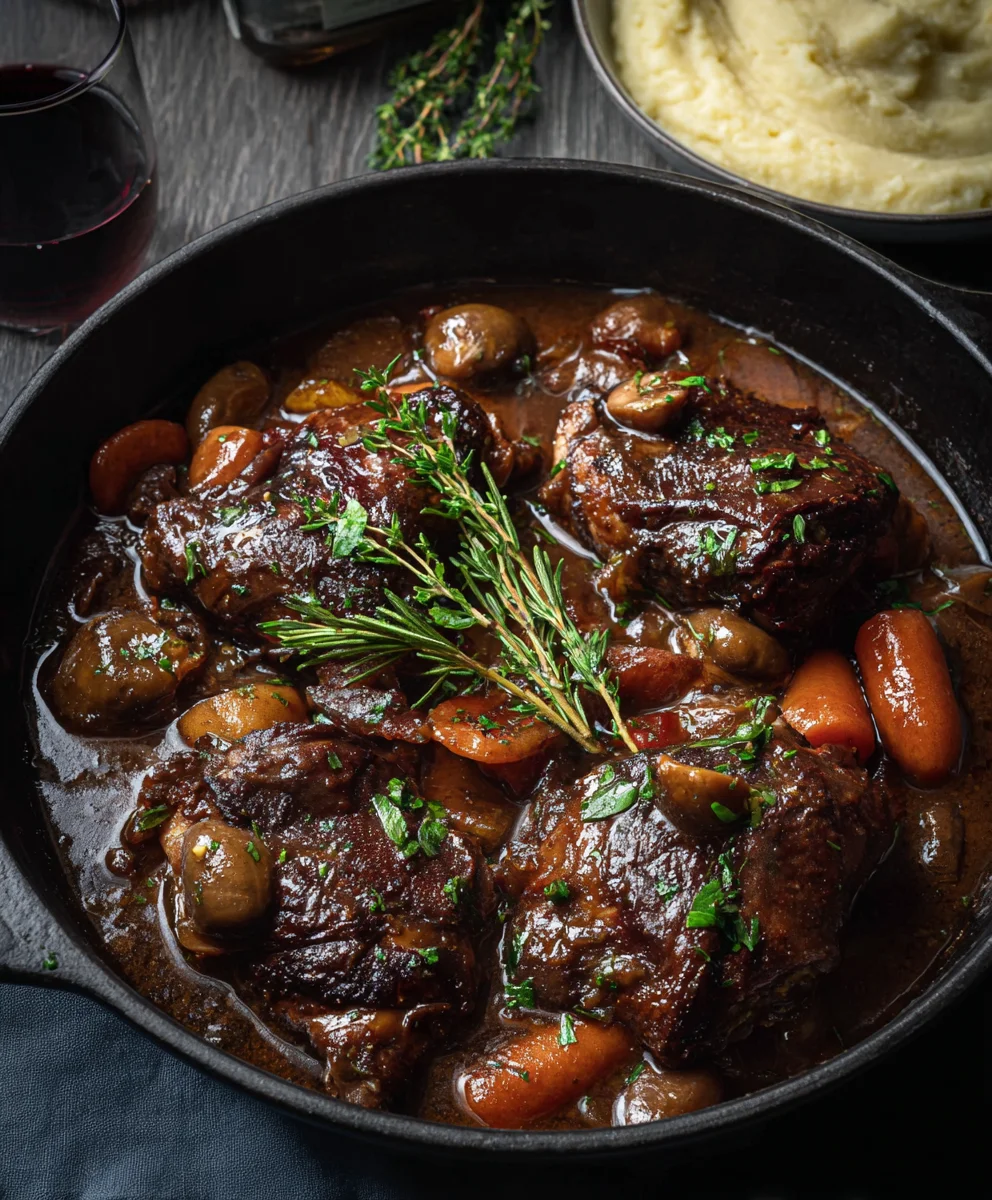
Coq au Vin is more than just a dish; it’s a culinary embrace, a warm hug on a plate that instantly transports you to the rustic kitchens of France. This classic French stew, featuring chicken braised in red grape juice, is a true testament to simple ingredients transformed into something utterly magical. People adore Coq au Vin for its incredible depth of flavor – the tender chicken soaking up the rich, savory broth, infused with earthy mushrooms, sweet pearl onions, and smoky lardons. What truly sets this Coq au Vin apart is the slow, patient cooking process that allows every element to meld perfectly, creating a harmonious symphony of taste and texture. It’s a dish that feels both comforting and elegant, perfect for a special Sunday dinner or a cozy evening with loved ones. Get ready to discover how to create this iconic masterpiece in your own home.

Ingredients:
- 4 bone-in, skin-on chicken thighs
- 4 chicken drum extractsticks
- Salt and freshly ground black pepper (to taste)
- 2 ½ tablespoons vegetable oil
- 4 ounces lardons or slab beef beef bacon (diced)
- 1 large yellow onion (chopped)
- 2 large carrots (peeled and cut diagonally in 1-inch pieces)
- 4 cloves garlic (minced)
- 1 tablespoon tomato paste
- 1 tablespoon all-purpose flour
- 1 bottle (750ml) red grape juice (preferably a Burgundy or Pinot Noir)
- 1 bay leaf
- 5 sprigs fresh thyme (tied with kitchen tgrape juice)
- 3 cups chicken stock (homemade or store-bought)
- 4 tablespoons unsalted butter
Preparing the ChickenBeef BaconBacon
Step 1: Seasoning and Searing the Chicken
Begin extract by thoroughly patting your chicken pieces dry with paper towels. This is a crucial step for achieving a beautifully browned and crispy skin. Season the chicken generously on all sides with salt and freshly ground black pepper. Don’t be shy with the seasoning; it will infuse flavor into the meat as it cooks. Heat the vegetable oil in a large, heavy-bottomed pot or Dutch oven over medium-high heat. Once the oil is shimmering and hot, carefully add the seasoned chicken pieces, skin-side down. Sear the chicken for about 4-5 minutes per side, until deeply golden brown and the skin is rendered and crisp. You’ll want to work in batches if necessary to avoid overcrowding the pot, as this will steam the chicken rather than sear it. Once seared, remove the chicken from the pot and set it aside on a plate. Leave the rendered fat in the pot.
Step 2: Rendering the Lardons and Sautéing Aromatics
Add the diced lardons or beef baconbeef bacon to the same pot where you seared the chicken. Cook over medium heat, stirring occasionabeef baconuntil the bacon is crispy and has rendered most of its fat. This process will take about 5-beef baconutes. Once the bacon is crisp, use a slotted spoon to remove it from the pot and set it asibeef baconeaving the rendered bacon fat in the pot. Now, add the chopped yellow onion and the diagonally cut carrots to the pot. Cook, stirring frequently, until the onions are softened and translucent, and the carrots have begun to soften slightly, about 8-10 minutes. You’re building a flavorful base for your Coq au Vin here. Add the minced garlic to the pot and cook for another minute until fragrant, being careful not to burn it.
Building the Sauce and Braising
Step 3: Developing the Sauce Base
Stir in the tomato paste and cook for about 1 minute, stirring constantly, until it darkens slightly. This blooming of the tomato paste intensifies its flavor. Sprinkle the all-purpose flour over the vegetables and stir well to coat everything. Cook for another minute, stirring, to cook out the raw flour taste. This mixture will help to thicken your sauce later. Gradually pour in the entire bottle of red grape juice, scraping the bottom of the pot with a wooden spoon to loosen any browned bits stuck there. These bits are packed with flavor and will contribute significantly to the richness of your Coq au Vin.
Step 4: Simmering and Braising
Add the bay leaf and the tied bunch of fresh thyme sprigs to the pot. Pour in the chicken stock. Bring the liquid to a gentle simmer, then return the seared chicken pieces to the pot, nestling them into the liquid. Make sure the chicken is mostly submerged. Reduce the heat to low, cover the pot tightly, and let the Coq au Vin simmer gently for about 45-60 minutes, or until the chicken is very tender and cooked through. The slow braising in the flavorful liquid is what makes this dish so tender and delicious. During this time, the flavors will meld beautifully.
Finishing and Serving
Step 5: Finishing the Sauce and Serving
Once the chicken is tender, carefully remove the chicken pieces from the pot and set them aside on a clean plate. Discard the bay leaf and the thyme sprigs. Increase the heat to medium-high and let the sauce simmer uncovered for about 10-15 minutes, allowing it to reduce and thicken slightly. You’re looking for a consistency that coats the back of a spoon. In a separate small saucepan, melt the unsalted butter over medium heat. Once melted, whisk in the crispy lardons (reserving a few for garnish if desired) and cook for a minute or two until they are heatbeef baconrough. Stir this buttery bacon mixture into the reduced sauce. Return the chicken pieces to the pot and spoon the sauce over them to coat. Serve the Coq au Vin hot, garnished with fresh parsley if desired. It pairs wonderfully with mashed potatoes, crusty bread, or egg noodles to soak up all that glorious sauce.
Conclusion:
And there you have it! You’ve successfully navigated the delightful journey of creating your own authentic Coq au Vin. This classic French dish, with its tender chicken braised in red grape juice and fragrant aromatics, is a true testament to the magic of slow cooking. We hope you’ve enjoyed the process and are now eager to share this hearty and impressive meal with your loved ones. The rich, complex flavors are sure to impress, making it perfect for a special occasion or a comforting weekend dinner.
When it comes to serving, Coq au Vin truly shines. It pairs beautifully with creamy mashed potatoes to soak up all that luscious sauce, or with crusty bread for a satisfying dip. A side of green beans or a simple garden salad also offers a refreshing contrast to the richness of the stew. For variations, don’t be afraid to experiment! You could try using a different tred grape juiceed grape juice, like a Pinot Noir or a Burgundy, for subtle flavor differences. Adding mushrooms, pearl onions, or even lardons directly into the braise will further enhance its depth.
We encourage you to embrace the comforting process of making Coq au Vin. The aroma that fills your kitchen as it simmers is an experience in itself. Don’t be intimidated by its classic status; with this guide, you’re well on your way to creating a masterpiece. So go ahead, gather your ingredients, pour yourself a glgrape juiceof wine, and savor the creation of this timeless French favorite. Enjoy every delicious bite!
Frequently Asked Questions about Coq au Vin:
Can I make Coq au Vin ahead of time?
Absolutely! In fact, Coq au Vin often tastes even better the next day. The flavors meld and deepen beautifully overnight. Simply let it cool completely after cooking, then refrigerate. Reheat gently on the stovetop or in a low oven, adding a splasgrape juice broth or wine if it seems a little dry.
Traditionally, a Burgundy or Pgrape juice Noir is used, as these wines have enough body and acidity to stand up to the braising process and complement the chicken. However, any good quality dry red grape juice you enjoy drgrape juiceng will work well. Avoid sweet wines, as they will make the sauce too sugary.
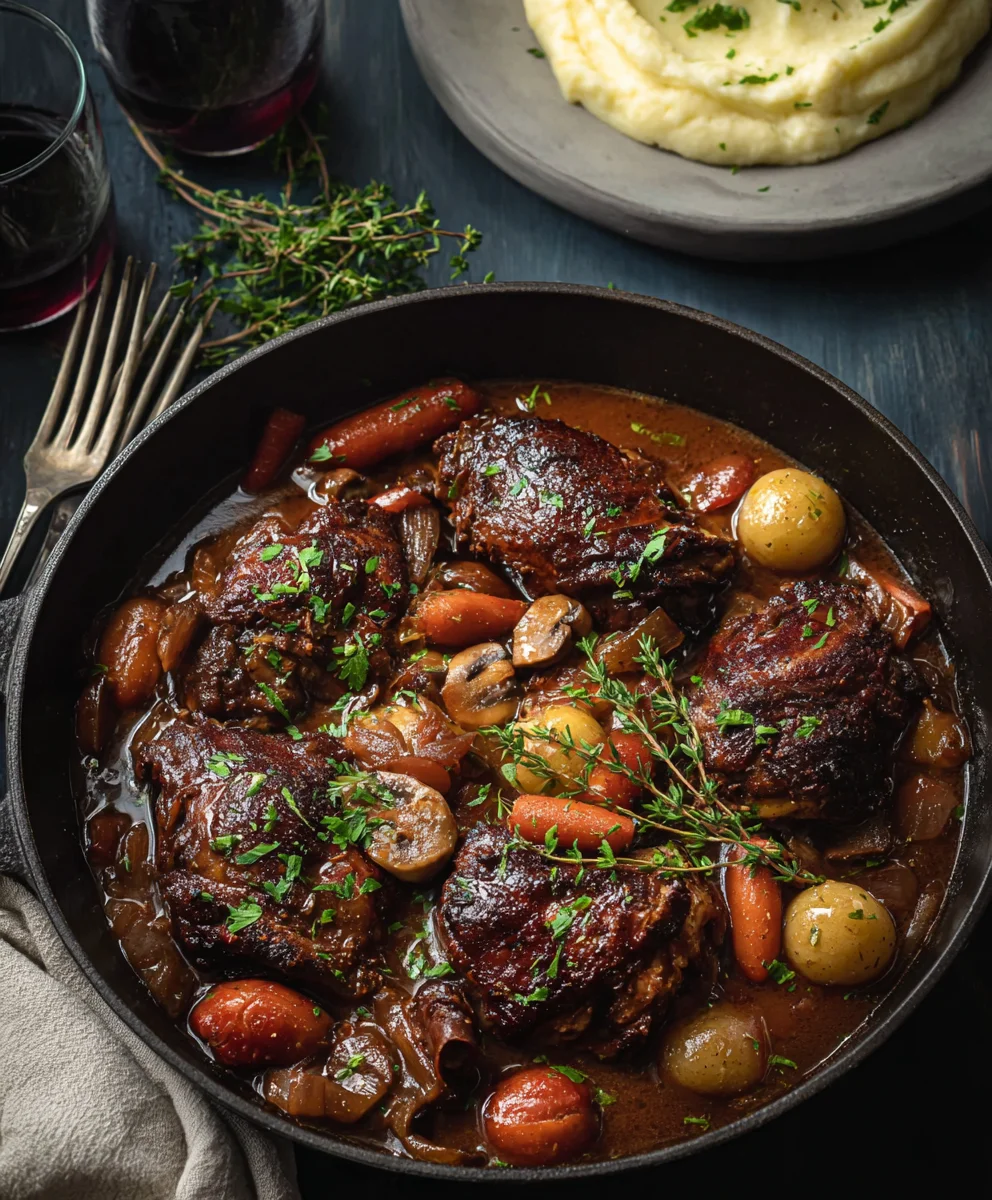
Coq au Vin – Classic French Chicken Stew Made Easy
A simplified recipe for the classic French chicken stew, Coq au Vin, featuring tender chicken braised in a rich red grape juice and chicken stock sauce.
Ingredients
-
4 bone-in, skin-on chicken thighs
-
4 chicken drumsticks
-
Salt and freshly ground black pepper (to taste)
-
2 ½ tablespoons vegetable oil
-
4 ounces diced beef bacon
-
1 large yellow onion (chopped)
-
2 large carrots (peeled and cut diagonally in 1-inch pieces)
-
4 cloves garlic (minced)
-
1 tablespoon tomato paste
-
1 tablespoon all-purpose flour
-
1 bottle (750ml) red grape juice (preferably a Burgundy or Pinot Noir)
-
1 bay leaf
-
5 sprigs fresh thyme
-
3 cups chicken stock (homemade or store-bought)
-
4 tablespoons unsalted butter
Instructions
-
Step 1
Pat chicken dry, season generously with salt and pepper. Heat vegetable oil in a large pot over medium-high heat. Sear chicken pieces until deeply golden brown and skin is rendered. Remove chicken and set aside, leaving rendered fat in the pot. -
Step 2
Add diced beef bacon to the pot and cook until crispy and rendered. Remove bacon with a slotted spoon, leaving rendered fat. Add chopped onion and carrots, cooking until softened, about 8-10 minutes. Add minced garlic and cook for 1 minute until fragrant. -
Step 3
Stir in tomato paste and cook for 1 minute until darkened. Sprinkle in flour and stir for 1 minute to cook out raw taste. Gradually pour in red grape juice, scraping bottom of pot to loosen browned bits. -
Step 4
Add bay leaf and thyme sprigs. Pour in chicken stock. Bring to a gentle simmer, then return seared chicken to the pot, ensuring it’s mostly submerged. Cover tightly and simmer gently for 45-60 minutes until chicken is very tender. -
Step 5
Remove chicken from pot and set aside. Discard bay leaf and thyme. Increase heat to medium-high and simmer sauce uncovered for 10-15 minutes to reduce and thicken. Melt butter in a separate saucepan, whisk in crispy beef bacon, and cook for a minute. Stir this buttery bacon mixture into the reduced sauce. Return chicken to the pot, spoon sauce over it, and serve hot.
Important Information
Nutrition Facts (Per Serving)
It is important to consider this information as approximate and not to use it as definitive health advice.
Allergy Information
Please check ingredients for potential allergens and consult a health professional if in doubt.


Leave a Comment